

 Menu
Menu 



What If Play Were Much More Than Just Fun?
By Marika Rhéaume
Assistant Director of Specialized Programs, Centre Notre-Dame-de-Fatima
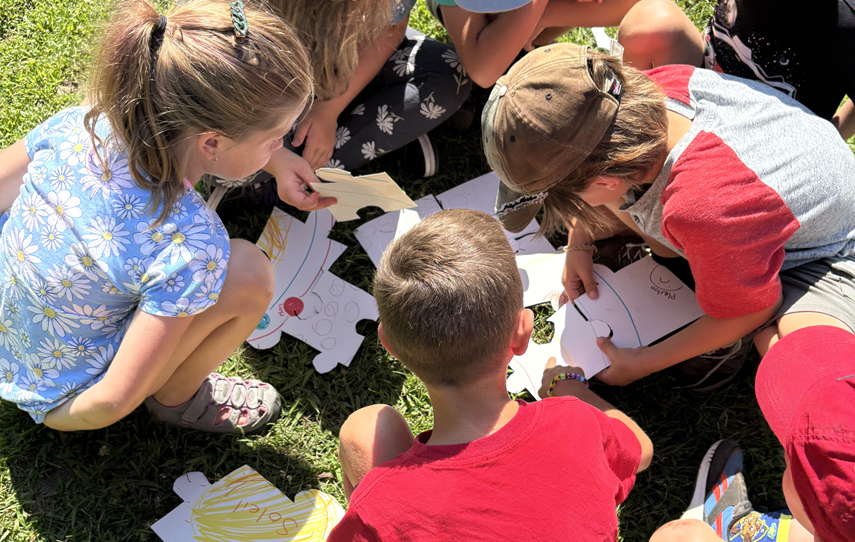
In our daily work—whether at vacation camp, respite services, or day camp—we often witness situations where a child who initially remains on the sidelines eventually begins interacting with others simply through play.
This is no coincidence. Play is an incredibly powerful learning tool.
Play: A Natural Way to Learn Social Skills
The development of social skills occurs through various forms of learning. Children learn by observing others, imitating them, trying things for themselves, and, most importantly, through real-life interactions. This is precisely what makes play so valuable. Research shows that play provides a natural environment that fosters social interaction. For some children, particularly those with special needs, play can become an essential gateway to connecting with others.
As we often observe at our centre, children can practice numerous social skills through play, often without even realizing it.
For example, they learn to:
- Wait their turn
- Share materials
- Communicate their needs
- Manage their emotions
- Resolve conflicts
Building Empathy and Cooperation Through Play
Certain types of play, such as pretend play and role-playing games, encourage children to put themselves in other people’s shoes. They can act out different situations while exploring emotions and reactions.
In my opinion, free play is also particularly fascinating to observe. The freedom it offers allows children to explore their creativity while naturally developing social skills such as cooperation, negotiation, and teamwork.
Play also contributes to a better understanding of emotions and helps children develop the ability to consider other people’s perspectives—an essential foundation for social relationships.
The benefits of play are not limited to the moment itself. They can endure over time and continue to influence social interactions. Skills practiced during play can later be transferred to other environments, such as school or home.
A Particularly Effective Tool for Children with Special Needs
In an intervention setting, play becomes even more valuable.
It can:
- Reduce social pressure, as children do not feel like they are completing a school exercise;
- Allow activities to be adapted to different levels of understanding;
- Increase motivation, especially for children who learn best through movement;
- Facilitate the observation of spontaneous skills, particularly during free-play periods.
It is therefore common to see professionals in schools and healthcare settings use play to encourage the development of new social skills.
Play becomes a space where children can grow at their own pace while strengthening their social abilities.
Real-Life Examples from the Centre Notre-Dame-de-Fatima
Our outdoor facilities help campers with special needs develop several social skills simultaneously. For example, during climbing activities, not all campers can climb at the same time. They must therefore wait their turn, observe others, and offer encouragement. With our giant foosball table, campers must communicate and work together to score goals, promoting cooperation and coordination among participants.
Beyond the facilities themselves, the choice and variety of games offered by our counselors also play an important role in developing social skills. Cooperative games encourage children to help one another, listen to others’ ideas, and work together to find solutions. Team games provide concrete opportunities to learn how to communicate, follow shared rules, handle both success and disappointment, and find their place within a group.
Each group also participates in themed collective motivation systems that run throughout the week. These systems create common goals that the entire group works toward. Each child is encouraged to reflect on how their actions affect others. This dynamic can foster teamwork, respect for rules, self-regulation, and a sense of belonging.
By varying games and interaction opportunities, counselors create countless natural occasions for children to practice social skills. Play becomes a true learning environment where children experience collaboration, communication, and group life firsthand.
The Adult’s Role: Supporting Without Controlling
Although play is natural, the role of adults remains essential.
In a camp setting like Fatima, counselors can:
- Support interactions between children;
- Help interpret social situations;
- Suggest solutions during conflicts;
- Adjust the level of difficulty when needed.
At times, a child’s age or level of understanding may make certain play situations more challenging. In these moments, the supportive presence of a counselor can make all the difference. By helping campers navigate conflicts, wait their turn, or understand rules, adults create valuable learning opportunities related to social skills.
Without taking control of the game, adults act as guides who transform everyday situations into meaningful learning experiences.
Much More Than Just Play
Play is far more than a source of entertainment. It is a powerful, accessible, and natural tool that promotes the development of essential social skills in children with special needs while respecting their individual pace and abilities.
Behind a game of foosball, a turn spent waiting at the climbing wall, or a period of free play, there is often much more than simple fun—there is an opportunity to learn how to connect with others.



By Marika Rhéaume
Assistant Director of Specialized Programs, Centre Notre-Dame-de-Fatima
In our daily work—whether at vacation camp, respite services, or day camp—we often witness situations where a child who initially remains on the sidelines eventually begins interacting with others simply through play.
This is no coincidence. Play is an incredibly powerful learning tool.
Play: A Natural Way to Learn Social Skills
The development of social skills occurs through various forms of learning. Children learn by observing others, imitating them, trying things for themselves, and, most importantly, through real-life interactions. This is precisely what makes play so valuable. Research shows that play provides a natural environment that fosters social interaction. For some children, particularly those with special needs, play can become an essential gateway to connecting with others.
As we often observe at our centre, children can practice numerous social skills through play, often without even realizing it.
For example, they learn to:
- Wait their turn
- Share materials
- Communicate their needs
- Manage their emotions
- Resolve conflicts
Building Empathy and Cooperation Through Play
Certain types of play, such as pretend play and role-playing games, encourage children to put themselves in other people’s shoes. They can act out different situations while exploring emotions and reactions.
In my opinion, free play is also particularly fascinating to observe. The freedom it offers allows children to explore their creativity while naturally developing social skills such as cooperation, negotiation, and teamwork.
Play also contributes to a better understanding of emotions and helps children develop the ability to consider other people’s perspectives—an essential foundation for social relationships.
The benefits of play are not limited to the moment itself. They can endure over time and continue to influence social interactions. Skills practiced during play can later be transferred to other environments, such as school or home.
A Particularly Effective Tool for Children with Special Needs
In an intervention setting, play becomes even more valuable.
It can:
- Reduce social pressure, as children do not feel like they are completing a school exercise;
- Allow activities to be adapted to different levels of understanding;
- Increase motivation, especially for children who learn best through movement;
- Facilitate the observation of spontaneous skills, particularly during free-play periods.
It is therefore common to see professionals in schools and healthcare settings use play to encourage the development of new social skills.
Play becomes a space where children can grow at their own pace while strengthening their social abilities.
Real-Life Examples from the Centre Notre-Dame-de-Fatima
Our outdoor facilities help campers with special needs develop several social skills simultaneously. For example, during climbing activities, not all campers can climb at the same time. They must therefore wait their turn, observe others, and offer encouragement. With our giant foosball table, campers must communicate and work together to score goals, promoting cooperation and coordination among participants.
Beyond the facilities themselves, the choice and variety of games offered by our counselors also play an important role in developing social skills. Cooperative games encourage children to help one another, listen to others’ ideas, and work together to find solutions. Team games provide concrete opportunities to learn how to communicate, follow shared rules, handle both success and disappointment, and find their place within a group.
Each group also participates in themed collective motivation systems that run throughout the week. These systems create common goals that the entire group works toward. Each child is encouraged to reflect on how their actions affect others. This dynamic can foster teamwork, respect for rules, self-regulation, and a sense of belonging.
By varying games and interaction opportunities, counselors create countless natural occasions for children to practice social skills. Play becomes a true learning environment where children experience collaboration, communication, and group life firsthand.
The Adult’s Role: Supporting Without Controlling
Although play is natural, the role of adults remains essential.
In a camp setting like Fatima, counselors can:
- Support interactions between children;
- Help interpret social situations;
- Suggest solutions during conflicts;
- Adjust the level of difficulty when needed.
At times, a child’s age or level of understanding may make certain play situations more challenging. In these moments, the supportive presence of a counselor can make all the difference. By helping campers navigate conflicts, wait their turn, or understand rules, adults create valuable learning opportunities related to social skills.
Without taking control of the game, adults act as guides who transform everyday situations into meaningful learning experiences.
Much More Than Just Play
Play is far more than a source of entertainment. It is a powerful, accessible, and natural tool that promotes the development of essential social skills in children with special needs while respecting their individual pace and abilities.
Behind a game of foosball, a turn spent waiting at the climbing wall, or a period of free play, there is often much more than simple fun—there is an opportunity to learn how to connect with others.